

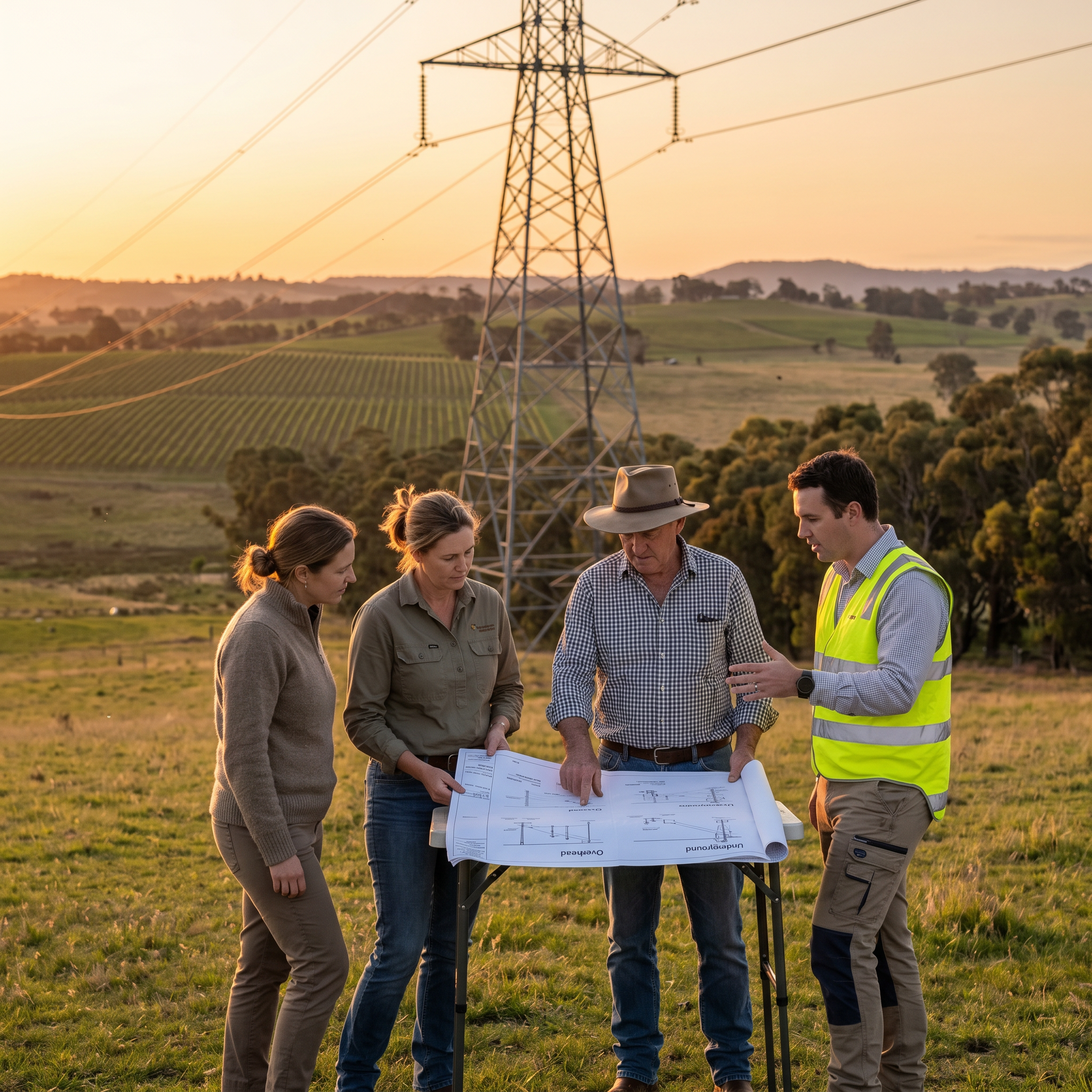
One of the most common questions asked whenever new electricity transmission lines are proposed is: "Why can't they simply be put underground?"
Underground transmission is technically possible and is used in some situations. However, whether it is appropriate depends on engineering requirements, environmental considerations, project costs, maintenance needs and the characteristics of the surrounding landscape.
Can High-Voltage Transmission Lines Be Underground?
Yes.
High-voltage electricity can be transmitted through underground cables, and this technology is used in Australia and around the world. Underground transmission is commonly found in urban areas where space is limited or where overhead lines are impractical.
It is also used for some river crossings, tunnels and environmentally sensitive locations.
Why Are Most Long-Distance Transmission Lines Overhead?
For long-distance transmission across regional areas, overhead lines remain the most common solution.
This is because they are generally:
- Less expensive to construct.
- Easier to inspect and maintain.
- Quicker to repair following faults.
- Better suited to very long transmission distances.
What Are the Advantages of Underground Cables?
- Reduced visual impact.
- Less exposure to wind and storms.
- No overhead towers across the landscape.
- Lower risk of damage from falling trees.
What Are the Challenges?
Underground transmission also presents challenges.
- Construction can be significantly more expensive.
- Installation requires extensive trenching or specialised drilling.
- Faults can take longer to locate and repair.
- Major repairs may require excavation.
- Construction can temporarily disturb soils, roads and underground services.
Does Underground Mean No Environmental Impact?
No.
Although underground cables remove overhead towers from the landscape, installation still requires construction activity that can affect vegetation, soils, waterways and agricultural land.
The type and extent of impacts depend on the route, construction methods and local environmental conditions.
How Is the Decision Made?
Transmission planners consider many factors when deciding whether infrastructure should be overhead or underground, including:
- Engineering requirements.
- Safety.
- Environmental impacts.
- Land use.
- Construction feasibility.
- Long-term maintenance.
- Project costs.
- Community feedback.
There is rarely a single factor that determines the outcome.
Our Position
Fair Go for North East Country believes communities deserve clear explanations about why particular transmission options are proposed.
Where alternatives exist, they should be assessed transparently, with the reasons for selecting a preferred option clearly explained. Meaningful consultation helps communities understand the trade-offs involved and builds confidence in the planning process.
Looking Ahead
Advances in transmission technology may continue to expand the situations where underground cables are practical. As Victoria's electricity network evolves, careful planning and open communication will remain essential in selecting solutions that balance reliability, environmental protection, agricultural productivity and community expectations.
Fair Go for North East Country supports practical, evidence-based planning that explains not only what decisions are made, but why they are made, helping communities participate in informed discussions about the future of regional Victoria.