
One major project can change a district. Several major projects in the same area can change the future of an entire region.
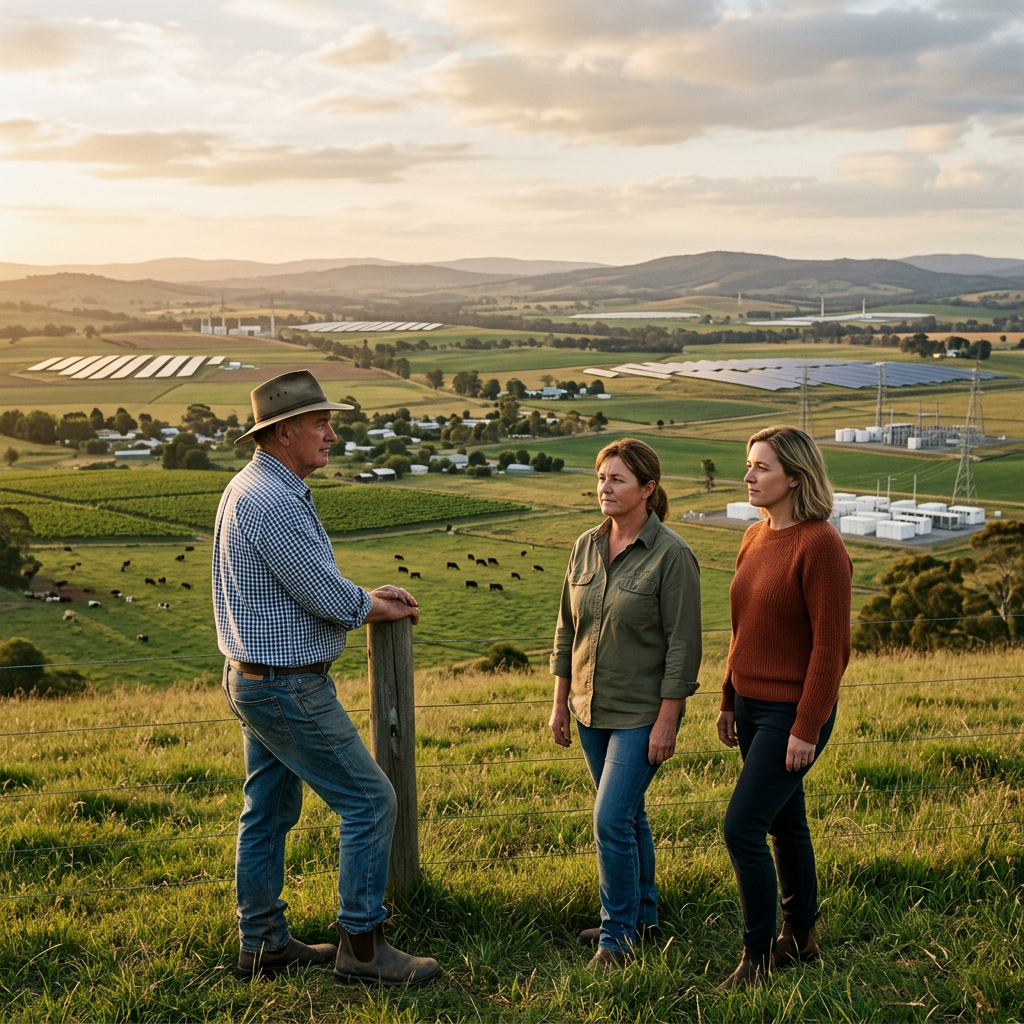
That is why cumulative impacts matter. Communities do not experience solar projects, batteries, transmission lines, road upgrades and construction traffic one application at a time. They experience them together, across real roads, real farms, real towns and real landscapes.
What Are Cumulative Impacts?
Cumulative impacts are the combined effects of multiple developments occurring in the same region over time.
A single project may be assessed on its own merits. But when many projects cluster in the same corridor, the combined impacts can be far greater than the impact of any one project by itself.
This can include pressure on farmland, roads, local infrastructure, emergency services, biodiversity, drainage, fire planning, visual amenity, property values and the overall character of rural communities.
Why This Matters in North East Country
North East Country is already facing significant pressure from large-scale renewable energy proposals, battery projects and associated infrastructure.
Community material provided to Fair Go for North East Country identifies 15 large-scale solar and battery energy storage projects that are operating, under construction, approved, under consideration or in early planning across Benalla Rural City. It also states that many of these projects are concentrated around the Winton, Goorambat and Glenrowan West corridor. [oai_citation:0‡Practical Planning: Putting Communities Before Politics.pdf](sediment://file_00000000720471fdb01ef1e4f6382ddf)
That concentration matters. A regional community should not be expected to assess each project in isolation while the combined impact continues to grow.
Projects Are Not Just Dots on a Map
Every major project has a footprint. It affects land, roads, neighbours, emergency access, visual landscapes, water movement, biodiversity and local services.
When projects multiply, so do the questions:
- How much productive farmland is being removed from agriculture?
- How many heavy vehicle movements will local roads carry?
- What happens when several projects require construction at the same time?
- Can local emergency services safely respond to fires, floods or incidents?
- How will multiple projects affect neighbouring landholders?
- What happens to the rural landscape when industrial infrastructure becomes concentrated in one corridor?
- Who is assessing the combined long-term impact?
Local Communities See the Whole Picture
Government and developers often assess projects through separate applications, reports and approval pathways. Local communities see the whole picture because they live with the combined result.
Farmers know how local land is used. Residents know the roads. CFA volunteers understand fire risk. Business owners understand local economies. Councils understand infrastructure pressures.
That knowledge should not be treated as an afterthought.
Renewable Energy Must Be Planned Properly
Fair Go for North East Country is not opposed to renewable energy. We support renewable energy where it is properly planned, appropriately located and developed with genuine community consultation.
But large-scale industrial energy projects should not be allowed to accumulate across rural communities without a clear, transparent and evidence-based assessment of the combined impact.
Our Position
Fair Go for North East Country believes cumulative impact assessment should be central to major planning decisions.
We support planning that:
- Assesses the combined impact of all existing, approved and proposed projects.
- Protects productive farmland from unnecessary industrialisation.
- Considers local roads, emergency services and infrastructure capacity.
- Examines effects on neighbouring landholders and rural amenity.
- Respects local knowledge and community experience.
- Ensures renewable energy projects are placed in appropriate locations.
- Provides transparent information before decisions are made.
A Fairer Planning Process
Communities should not have to fight project by project while the bigger regional picture is ignored.
Good planning means looking beyond individual permits and asking whether the total impact is fair, sustainable and in the long-term interests of North East Country.
If a region is being asked to carry the burden of multiple large-scale industrial energy projects, then that region deserves a proper cumulative impact assessment, genuine consultation and a fair say before more approvals are granted.
Fair Go for North East Country supports renewable energy done right — with practical planning, genuine community consultation and proper protection for productive farmland, local infrastructure and regional communities.