
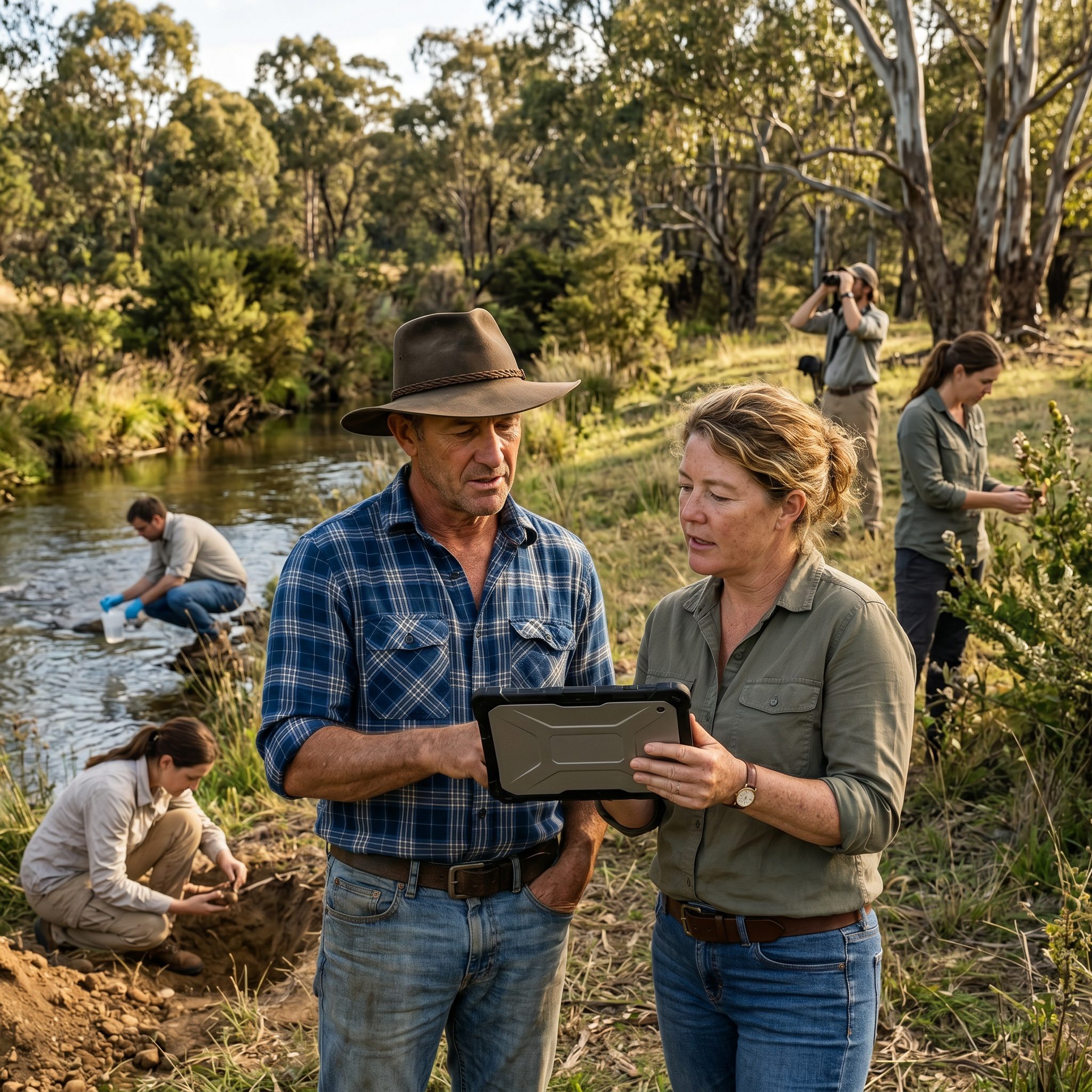
Before many major infrastructure projects can proceed, environmental surveys are undertaken to better understand the natural features of the land and identify any environmental values that may require protection.
These surveys form an important part of the planning and environmental assessment process and help decision-makers understand how a proposal may affect the surrounding environment.
Why Are Environmental Surveys Carried Out?
Environmental surveys collect information that may be required to support planning applications, environmental assessments and project design.
The information gathered helps identify environmental opportunities, constraints and potential impacts before decisions are made.
What Types of Surveys Are Undertaken?
Depending on the location and the nature of the proposal, surveys may include:
- Native vegetation assessments.
- Threatened plant surveys.
- Wildlife and habitat surveys.
- Bird monitoring.
- Waterway and wetland assessments.
- Soil investigations.
- Hydrology and drainage studies.
- Weed and pest assessments.
- Bushfire risk assessments.
When Are Surveys Conducted?
Many environmental surveys are undertaken during particular seasons when plants are flowering or animals are most active. As a result, studies for larger projects may occur over several months or even across more than one year.
Do Survey Teams Need Access to Private Land?
Some environmental surveys require access to private property. The arrangements for entry depend on the legislation applying to the project and any agreements reached with landholders.
Landholders should understand who is requesting access, what work is proposed and what legal authority applies.
How Is the Information Used?
The results of environmental surveys may be used to:
- Refine project designs.
- Avoid environmentally sensitive areas where practical.
- Develop mitigation measures.
- Support planning and environmental approval processes.
- Inform government decision-makers.
Can Communities See the Results?
For many major projects, environmental reports become publicly available as part of the planning or environmental assessment process. The level of public access depends on the legislation and approval pathway for the project.
Our Position
Fair Go for North East Country supports thorough, science-based environmental assessments that are carried out transparently and respectfully.
Landholders should receive clear communication about survey activities, and communities should have access to the information needed to understand how environmental values have been assessed.
Looking Ahead
Good environmental information helps support better planning decisions. Understanding how environmental surveys are conducted allows communities to participate more confidently in discussions about major developments affecting regional Victoria.
Fair Go for North East Country believes informed planning should be supported by sound science, transparent processes and meaningful engagement with local communities and landholders.