
Large-scale solar farms are among the most thoroughly assessed infrastructure projects in Australia. Before construction can begin, developers usually complete technical studies, environmental investigations, community consultation and multiple regulatory approvals.
Because every project is different, there is no standard approval timeframe.
How Long Does the Process Usually Take?
For a utility-scale solar farm, planning and approval can often take two to five years, although some projects take less time and others take considerably longer.
The timeframe depends on factors such as the size of the project, environmental complexity, community consultation, grid connection requirements and the approval pathway.
Typical Stages
- Site selection and feasibility studies.
- Landholder discussions and lease negotiations.
- Environmental and technical investigations.
- Community consultation.
- Preparation of planning documentation.
- Government assessment.
- Planning approval and permit conditions.
- Grid connection approvals.
- Construction planning.
Why Can It Take So Long?
Major infrastructure projects require detailed technical information before decisions can be made.
Studies may include:
- Ecology.
- Traffic.
- Noise.
- Landscape and visual impacts.
- Bushfire risk.
- Flood modelling.
- Cultural heritage.
- Agricultural assessments.
Some environmental studies must be carried out during particular seasons, meaning they cannot always be completed quickly.
Can the Community Have Input?
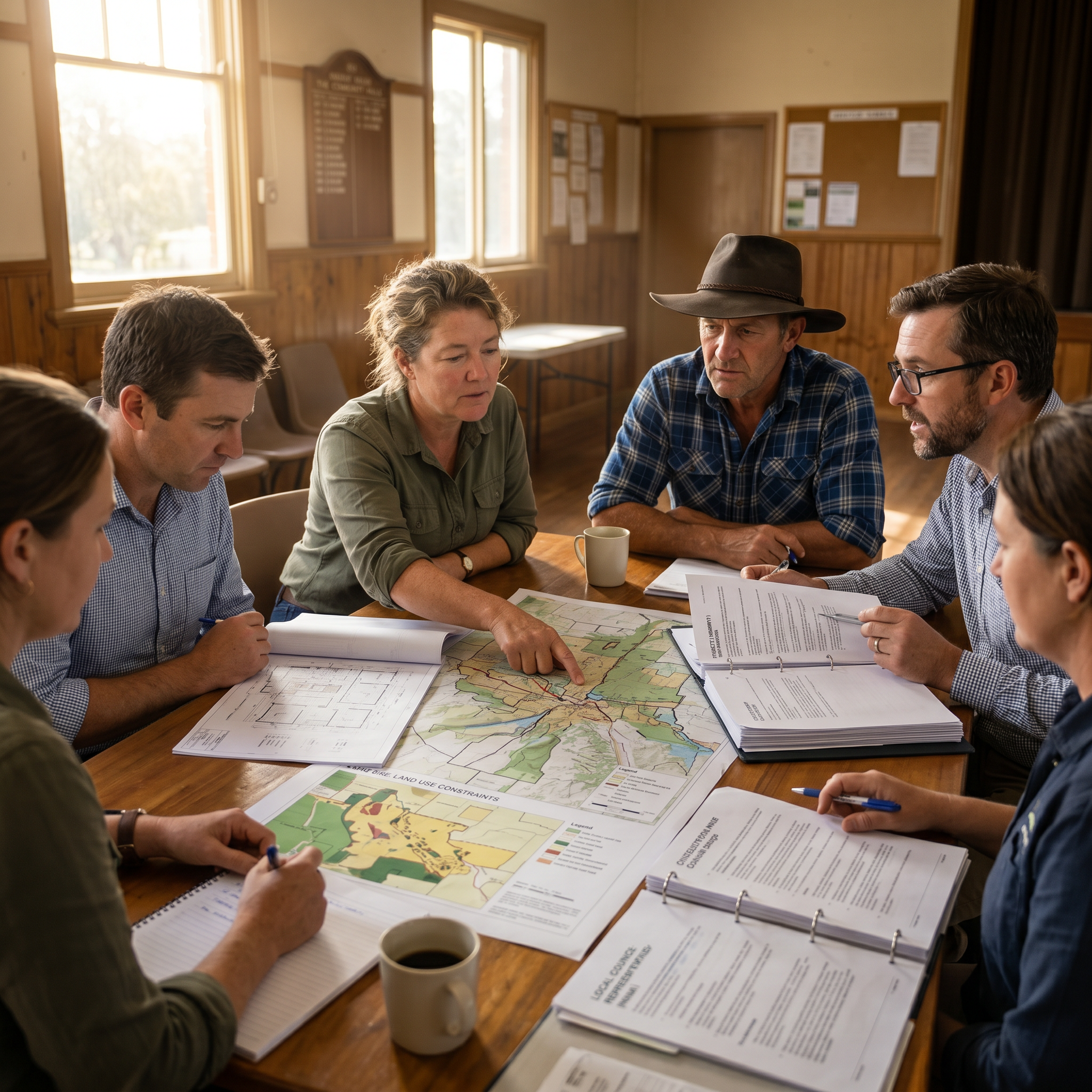
Many projects include opportunities for community consultation during the planning process.
Depending on the approval pathway, residents may be able to attend information sessions, review planning documents and lodge formal submissions.
Does Approval Mean Construction Starts Immediately?
Not necessarily.
Even after planning approval is granted, projects may still need to satisfy permit conditions, finalise financing, secure grid connection agreements and complete detailed engineering before construction begins.
Our Position
Fair Go for North East Country believes major planning decisions should be made carefully, transparently and based on robust evidence.
Communities should have meaningful opportunities to understand proposals and provide feedback before approvals are granted.
Looking Ahead
Good planning takes time. Thorough environmental studies, technical assessments and genuine consultation help ensure decisions are based on sound information and consider the long-term interests of regional communities.
Fair Go for North East Country supports planning processes that are transparent, evidence-based and give communities confidence that major developments have been properly assessed before construction begins.