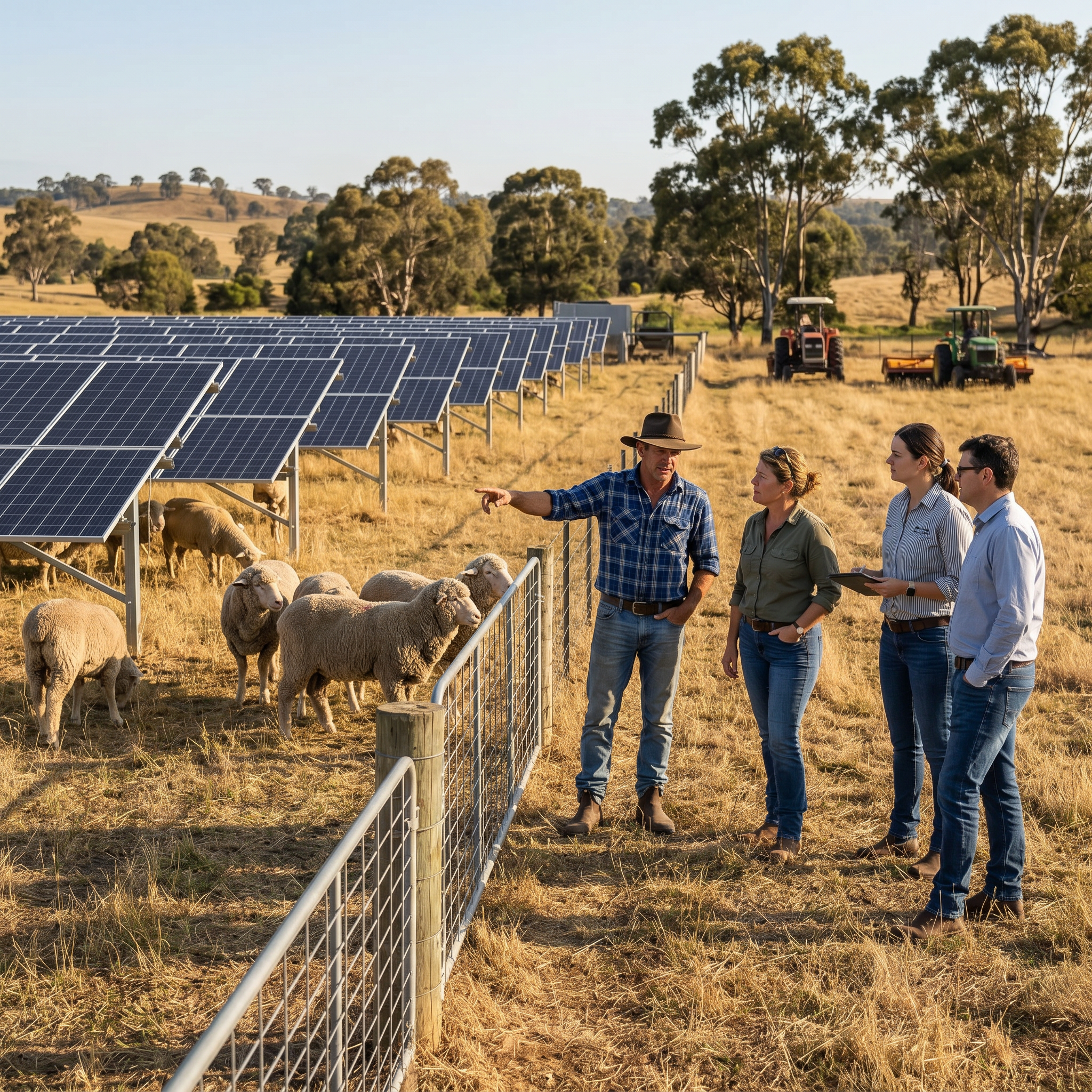
Yes. Sheep can graze under solar panels, and this practice is already used at a number of solar farms in Australia and overseas. The approach, often referred to as agrivoltaics or solar grazing, combines livestock production with renewable energy generation on the same land.
However, while sheep grazing can work well in some situations, it is not suitable for every property, every type of farming or every solar farm design.
Why Sheep?
Sheep are generally well suited to grazing around solar panels because they are smaller than cattle and are less likely to damage solar infrastructure.
Grazing sheep can also help manage pasture growth, reducing the need for mechanical slashing or mowing beneath the panels.
Where Is It Being Used?
Solar grazing has been adopted at a number of renewable energy projects in Australia, the United States and Europe. In many cases, local farmers continue grazing sheep while the solar farm is operating.
The success of these arrangements depends on factors such as pasture quality, fencing, water supply, farm management and the design of the solar farm.
What Are the Potential Benefits?
- Continued agricultural use of the land.
- Natural vegetation management by grazing livestock.
- Reduced need for mowing and slashing.
- Additional income opportunities for some farmers.
- Ongoing livestock production during the life of the project.
Are There Limitations?
Yes. Solar grazing is not a solution for every farming enterprise.
Potential challenges may include:
- Not all solar farm layouts are suitable for grazing.
- Access for farm machinery may be more restricted.
- Pasture growth can vary depending on panel spacing and shade.
- Biosecurity and livestock management still require careful planning.
- Cropping and intensive agricultural uses may not be practical within the same area.
Can All Livestock Graze Under Solar Panels?
Sheep are the most common livestock used because of their size and grazing behaviour.
Some projects have investigated grazing with other animals, but cattle, horses and larger livestock may require different infrastructure and can present additional management challenges.
Does Grazing Mean the Land Is Fully Preserved?
Not necessarily.
While grazing allows an agricultural activity to continue, the land is still being used for energy infrastructure. Whether this represents the highest and best agricultural use of a property depends on many factors, including the type of farming, local conditions and the design of the project.
Our Position
Fair Go for North East Country supports practical, evidence-based discussions about land use.
Where solar grazing is proposed, communities and landholders should have access to clear information about how it will operate, what agricultural activities can continue and what limitations may apply.
Every property is different, and decisions should consider local farming practices, long-term productivity and the needs of individual landholders.
Looking Ahead
Agrivoltaics continues to develop as farming and renewable energy evolve. Ongoing research and practical experience will help determine where solar grazing is appropriate and where other land uses may be more suitable.
Fair Go for North East Country believes informed planning should consider both renewable energy opportunities and the long-term future of productive agriculture, ensuring communities have the information they need to make informed decisions.