

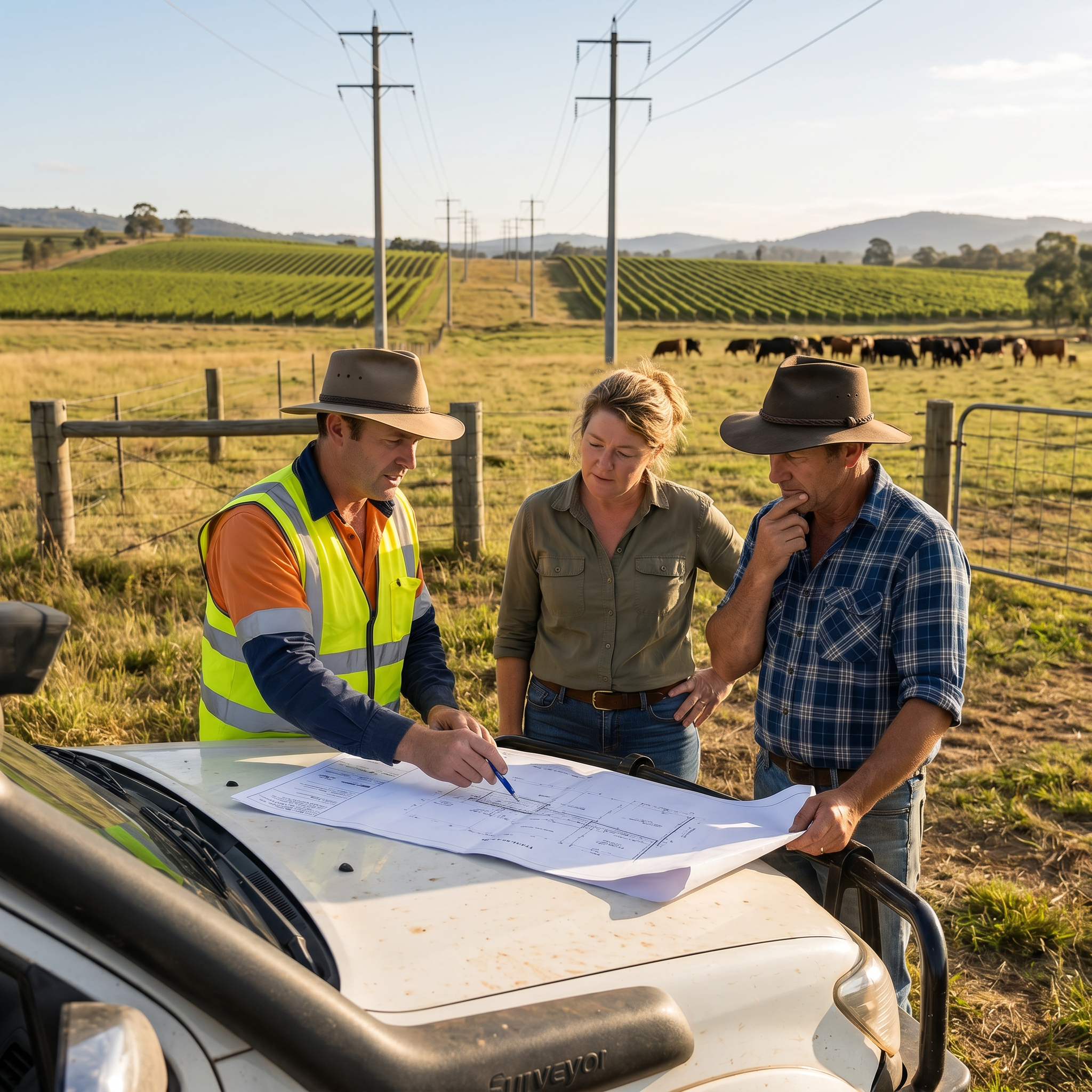
The word easement is often mentioned when discussing electricity transmission lines, pipelines, roads and other infrastructure. While many landholders have heard the term, there is often confusion about what it actually means and how it affects property ownership.
This article explains easements in simple terms and why they are commonly used for major infrastructure projects.
What Is an Easement?
An easement is a legal right that allows another person, company or authority to use part of a property for a specific purpose while the land remains under the ownership of the landholder.
Unlike selling land, an easement does not usually transfer ownership. Instead, it grants defined rights over part of the property.
Common Types of Easements
Easements can exist for many reasons, including:
- Electricity transmission lines.
- Water pipelines.
- Sewerage infrastructure.
- Drainage.
- Access roads.
- Telecommunications infrastructure.
Can I Still Use My Land?
Often, yes.
The activities that can continue within an easement depend on its legal terms and the type of infrastructure involved.
For example, many transmission line easements continue to be used for grazing or cropping, although restrictions may apply to buildings, tall vegetation or certain earthworks.
How Is an Easement Created?
An easement may be created through agreement between the landholder and the relevant authority or under legislation where particular legal processes apply.
The exact process depends on the project, the legislation involved and the circumstances of the land.
Is Compensation Available?
Where an easement is acquired for major infrastructure, compensation arrangements may apply depending on the legislation and the nature of the project.
The amount and method of compensation vary and may take into account matters such as land value, impacts on farming operations and any ongoing restrictions placed on the property.
Questions Landholders Should Ask
- Exactly where will the easement be located?
- What activities can continue?
- What restrictions will apply?
- Who is responsible for maintenance?
- How will access be managed?
- What compensation arrangements are available?
- What rights remain with the landholder?
Our Position
Fair Go for North East Country believes landholders should receive clear information about easements before decisions are made.
Property owners deserve transparency, fair consultation and a clear understanding of how an easement may affect the long-term use of their land.
Looking Ahead
Easements have been part of Australian land management for many decades and continue to play an important role in delivering essential infrastructure. Understanding how they work helps landholders make informed decisions and ask the right questions during planning and consultation.
Fair Go for North East Country supports practical, evidence-based planning that respects private property rights while ensuring communities understand the legal and practical implications of infrastructure projects.