
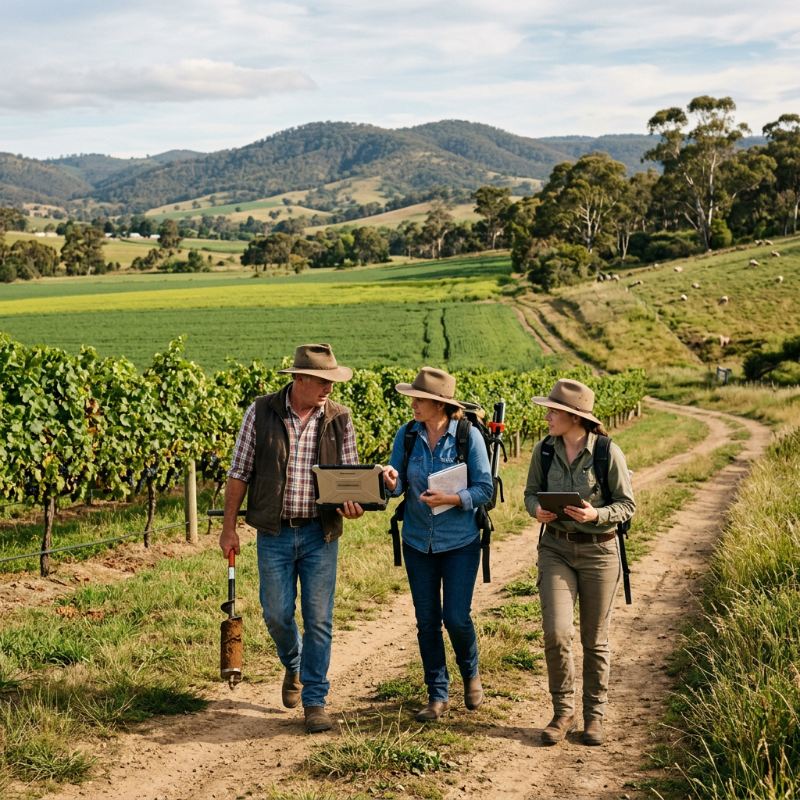
One of the most common terms used in planning reports is agricultural land capability. It is often mentioned when discussing major developments on rural land, yet many people are unsure what it actually means.
Land capability is an important planning tool, but it is only one factor considered when assessing the value and future use of agricultural land.
What Is Agricultural Land Capability?
Agricultural land capability describes how well land is suited to different types of agricultural production while considering its physical characteristics and limitations.
Assessments consider a combination of natural factors rather than a single measurement.
What Factors Are Considered?
Land capability assessments may examine:
- Soil type and depth.
- Rainfall.
- Slope.
- Drainage.
- Flood risk.
- Erosion potential.
- Climate.
- Access to water.
Different types of farming place different demands on the land, meaning the same property may be highly suitable for one agricultural use but less suitable for another.
Does Lower Capability Mean the Land Has No Value?
No.
Land capability classifications do not determine whether land is "good" or "bad". They simply describe how suitable land may be for different agricultural purposes under particular conditions.
Many successful farming businesses operate on land with varying capability classes by matching agricultural enterprises to local conditions and applying good land management practices.
More Than Just Soil
The long-term value of farmland is influenced by many factors beyond soil alone, including:
- Reliable rainfall.
- Access to water.
- Existing farm infrastructure.
- Climate.
- Local knowledge.
- Investment made over generations.
- Proximity to markets and transport.
These factors often work together to support productive and sustainable farming.
Why It Matters
Understanding land capability helps governments, planners, farmers and communities make informed decisions about land use.
It is one of many considerations alongside environmental values, infrastructure, biodiversity, local economies and community needs.
Our Position
Fair Go for North East Country believes agricultural land should be assessed using transparent, evidence-based information and considered within the broader context of regional food production, farming businesses and future generations.
Land capability is an important planning tool, but it should not be viewed in isolation from the many other factors that contribute to a productive agricultural landscape.
Looking Ahead
As demand for food, fibre and renewable energy continues to grow, understanding agricultural land capability will remain an important part of balancing competing land uses.
Fair Go for North East Country supports informed discussion based on science, local knowledge and practical planning that protects the long-term future of agriculture across North East Victoria.